
Toilet Training Twins
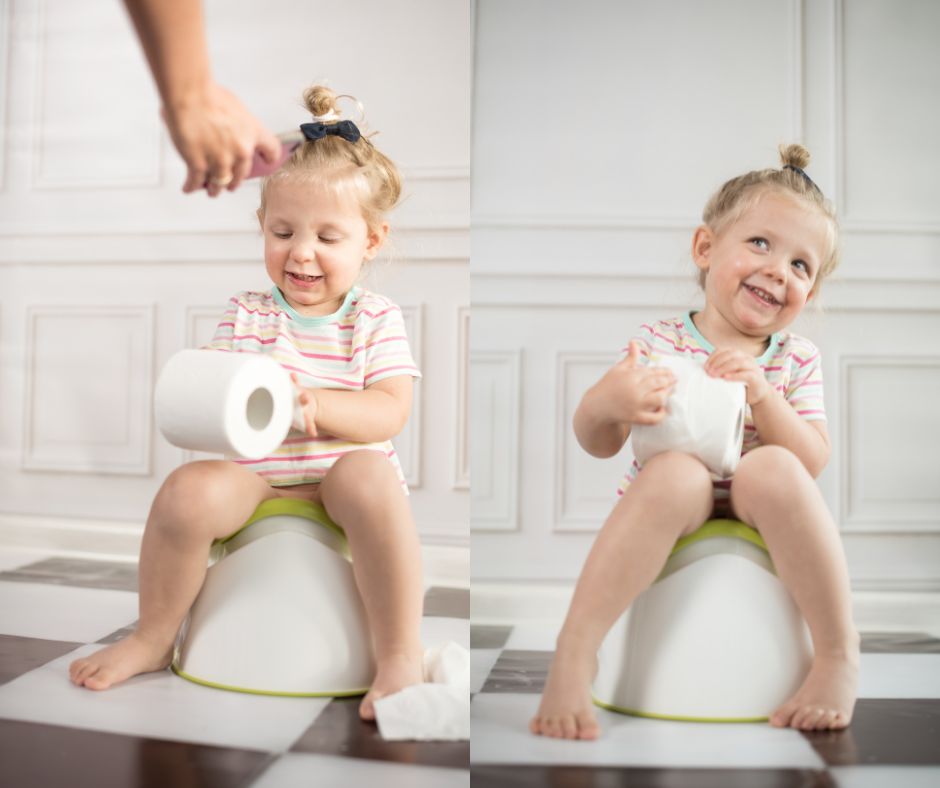
How to Toilet Train Your Twins with Ease
Toilet training twins can feel like a great challenge for most parents. Some can’t wait to get through it, while others might be dreading the day they need to address the topic.
As a twin specialist with over 16 years of experience working with twins, I can help you and your family navigate this twin challenge with more ease.
To unpack this, there are a few things parents need to know that can make the process easier and smoother.
The key factors before starting toilet training your twins
For a successful transition from diapers to undies, children need to be ready on three different levels:
1. Emotionally - feeling safe to let go (of control, of their body’s fluids, being vulnerable).
2. Physically - being able to dress and undress themselves (pull-up diapers are great for preparing toddlers for this action).
3. Cognitively - recognising the signs in their bodies when they need to go to the toilet (feeling the need to go before they actually do).
Oftentimes, children can be ready on one or two of these, but not all three. And when we start the process before they are ready, it tends to be more frustrating for all parties.
About Accidents during Toilet Training
When children aren’t ready on all three levels, we then see more “accidents”.
What is interesting about it is that it’s not really an accident - it’s a sign that they are either not ready yet, they feel pressured, they are nervous, or they are still learning. Either way, it’s not an accident. Learning takes time, and even more time when the process is premature.
When children are having a lot of these “accidents “, and our expectations of them are that they ought to get better at this process, the interactions with the child/ren become more negative.
It can therefore delay the process as the child/ren start to feel bad, ashamed, and guilty for not “succeeding”.
Why toilet training later is actually better
When we wait for children to show us they are ready, the process is smoother, more positive, and more successful. You will encounter fewer “accidents”, and the process will feel rewarding for the child/ren.
It’s about setting realistic, relevant goals for children based on their developmental and emotional levels to set them up for success.
Toilet training twins
With twins, choosing to do the process in tandem or one by one is an individual decision.
Remember, it needs to be based on each child’s level of readiness, and avoiding applying unnecessary pressure and comparisons is key. They won’t necessarily be ready at the same time, and that is alright.
When we wait until each child is ready, the transition can happen closer to age 3, and at times, even age 4. The rationale behind this approach is rooted in the RIE childcare philosophy (developed by Magda Gerber), and it focuses on respecting each child as competent, resourceful, and autonomous from birth. Through this lens, we can appreciate what children can and are doing, rather than focusing on what they are not yet doing (such as being ready to transition out of diapers).
But worry not. All children learn to use the toilet eventually, and helping them gain confidence and independence in their bodies is an invaluable part of the process. This will stay with them for life
One twin might be ready early, and they can start the process even if their co-twin isn’t.
In fact, doing it this way will help them both learn that they are different and that it’s ok to do things when they are ready, rather than “catch up to their twin”.
And that is not bad or wrong. It’s actually part of life and a wonderful lesson for your twins.
Toilet training twins can be made easier when we know how best to approach the process.
Here is what you should know before beginning TOILET TRAINING your TWINS:
Your children will start showing interest in their diaper change, and their co-twin’s.
They might start telling you when they are “going”. (That’s the first step before noticing the sensation in their bodies before they are going. This latter part comes at a later age).
Their diaper will be drier between changes.
They will want to watch you (or another adult/sibling) using the toilet
They will ask to use the toilet/potty.
These steps will ebb and flow, and just because they will use the potty once doesn’t mean they are ready. Children often go back and forth between these stages until all three levels are ready to engage in the processes.
Before STARTING toilet TRAINING your twins:
Look for the signs.
Consider doing it one at a time based on each one’s level of readiness.
Use positive, patient, and encouraging language that isn’t shaming, adding pressure, or comparing them.
Expect the process to progress with ups and downs (it’s not a linear trajectory).
When children are ready, and partners aren’t pressuring them, the process is faster, more positive, and more rewarding for all parties.
If you need help with your twins’ behaviour, or are currently facing challenges, you can book a free discovery call to learn about my Twin Parental Guidance Consultation services.