
Do Twins Really Need to Share?
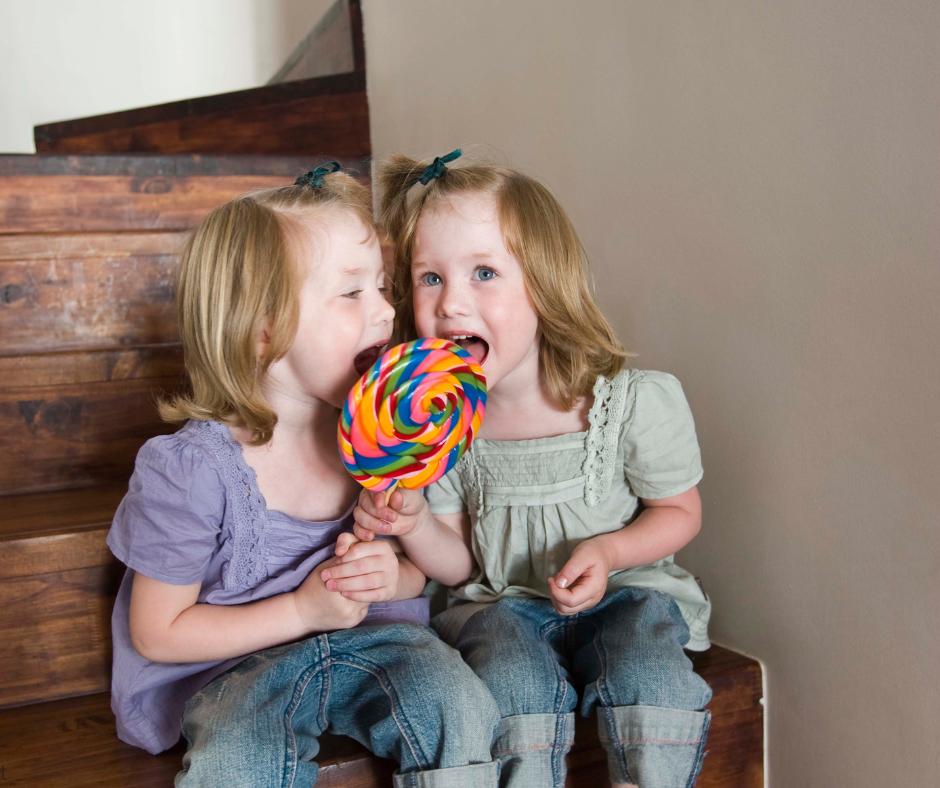
How to help twins share?
Let’s be honest… we want twins to share.
Sharing is kind, and we want them to care about each other and get along, without fighting…
But… here is the thing… Sharing isn’t always possible, nor should it be expected all the time.
There is so much that goes into sharing, especially with twins, that can support and promote their socio-emotional skills, identity development, and self-esteem.
I sat down with Ruth from Play Schemas to talk about how we can help twin parents navigate the challenging subject of sharing, in episode 41 of the “Demystifying Child's Play” podcast.
We discussed the reasons sharing is hard to begin with, how to support twins when they DON'T want or need to share, and how to foster their socio-emotional skills as they develop empathy and understanding of others' needs and feelings.
Parenting twins is a beautiful gift but, and it can also feel overwhelming
From double nappies to double tantrums, everything feels doubled (or more…). And when it comes to sharing, many parents wonder:
Should twins always share?
What if they’re constantly fighting over the same toy?
How do I teach fairness without endless meltdowns?
In this episode of Demystifying Child’s Play, we talk about what parents of twins need to hear:
Sharing isn’t always caring, and it’s okay for twins to have their own things.
Together, Ruth and I unpack some of the most common challenges twin parents face and offer practical, play-based strategies to bring more peace, confidence, and joy into twin parents’ daily lives.
What We Cover in This Episode:
The truth about sharing: Why children under 3–4 aren’t developmentally ready to share in the way we expect:
We often expect toddlers to “be kind and share” long before they’re developmentally able to do so. The truth is, real sharing requires empathy and perspective-taking, and those skills don’t usually kick in until around 3 or 4 years old.
So if your 2-year-old twins are screaming over a toy, it’s not because they’re selfish. It’s because they’re simply not ready yet. By adjusting your expectations, you can reduce frustration (for you and your children).
Why forced sharing backfires: How telling children to hand things over doesn’t build kindness, it builds compliance:
Handing over a toy because Mum said so isn’t generosity, it’s compliance. Sharing should be a choice, not a chore.
Instead of demanding your twins “give it up”, try reflecting their feelings and coaching them through the conflict:
“I can see you’re upset. You really want a turn.”
“Your brother hasn’t finished yet. Let’s wait together.”
“Would you like to share with her now, or hold onto it a bit longer?”
This approach helps children develop empathy, patience, and problem-solving skills that last far longer than a forced “fair share” ever could.
The power of ownership: Why giving twins their own belongings helps reduce conflict and build independence:
Here’s the controversial bit: twins don’t need to share everything. In fact, having belongings that are “just mine” is vital for developing identity and autonomy.
It might be a backpack, a favourite soft toy, or even a special plate. By recognising that each child is an individual with the right to ownership (like every singleton), you reduce competition and give them the security of knowing some things are off-limits.
When children feel safe in their ownership, they’re actually more open to genuine sharing in other areas.
The guilt and entitlement trap: How constant sharing pressures can lead to tricky behaviours and big emotions:
When twins are always expected to share, one child may feel guilty for keeping something, while the other may feel entitled to always get the same. Neither outcome sets them up well for life.
I have seen it often: one twin receives something, immediately scans for their co-twin, and either hands it over reluctantly or clutches it tightly, anticipating a demand to share.
This dynamic creates unnecessary stress and can escalate into bigger conflicts. Allowing individuality and boundaries helps both twins grow with confidence rather than guilt.
Fair vs. equal: Why twins don’t need two of everything, and how normalising differences sets them up for real-life success:
Perhaps the most freeing insight? Twins aren’t equal, and life isn’t fair.
That doesn’t mean treating one child better than the other. It means avoiding the trap of always duplicating everything, two identical toys, two matching outfits, two of the same snack.
Life doesn’t work that way. Instead, teach your twins that it’s okay to have different toys, different roles, and different experiences. By normalising differences, you help them adapt to the real world and reduce fights at home.
When you understand what your children are really learning through play and conflict, you can respond with more empathy and less frustration.
What This Means in our daily lives:
- Don’t rush children into sharing before they’re ready.
- Respect ownership and individuality.
- Teach that fairness isn’t about equality, but about balance.
Parenting is hard, and that doesn’t mean you’re failing. With a few small shifts, you can reduce conflict, support your child’s development, and bring more peace into your home.
This episode will help you discover that:
Play is learning. Every conflict is a chance to practise problem-solving, patience, and connection.
Small shifts matter. Just a few tweaks in how you approach sharing can completely change the tone in your home.
Connection is key. It’s not about getting it “perfect”; it’s about creating an environment where your children feel seen, safe, and supported.
Want to learn more about my 5 strategies to support twins?
Watch episode 41 of the “Demystifying Child's Play” podcast. Available also on YouTube, or listen to it on Spotify