
TAPS talk with Stephanie Ernst
Understanding TAPS in twin pregnancies
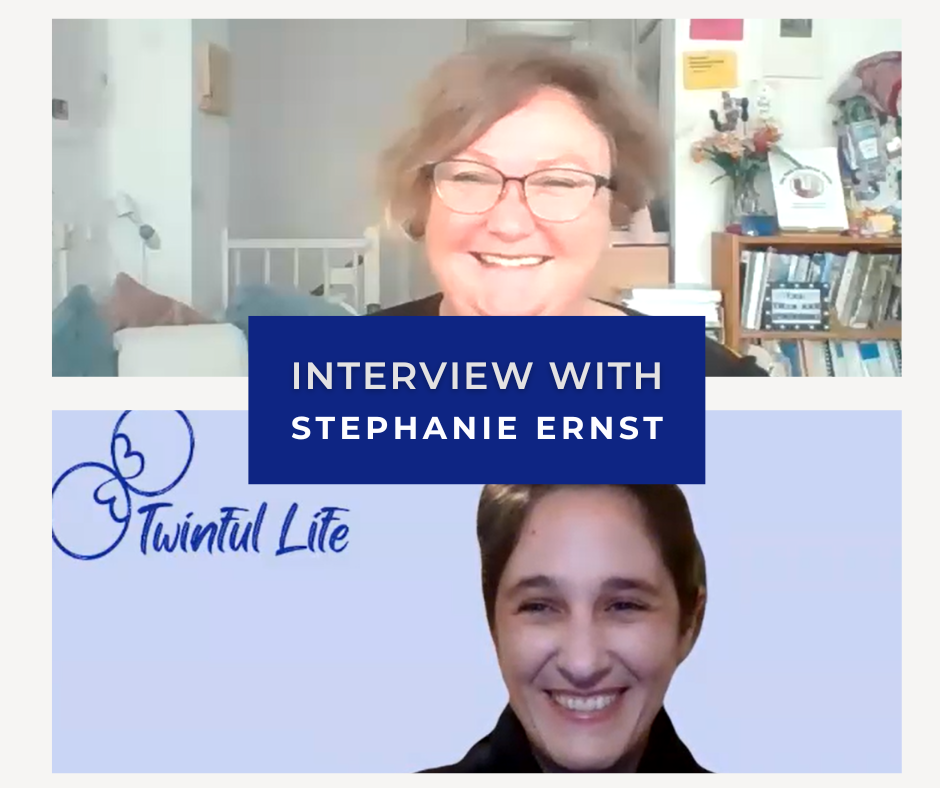
I had the privilege to interview Stephanie Ernst, the founder of the TAPS Support Foundation, a mum of twins born at 31 weeks with TAPS, an advocate for newborn’s health and care standards at the NICU, and an active participant in research and committees dedicated to the cause.
We unpack what TAPS is (Twin Anemia Polycythemia Sequence), what expectant parents need to know, how to navigate the pregnancy, doctor-patient interactions, and its possible effects on both babies.
Watch the interview here
Stephanie’s website: https://stephanieernst.nl/
TAPS Support website: https://www.tapssupport.com/
Stephanie’s Instagram: https://www.instagram.com/stephanieernstwriter
Transcript:
Smadar Zmirin: Okay, welcome everybody who are tuning in to watch this today. Joining me today is Stephanie Ernst. I hope I'm pronouncing it correctly. Stephanie is the founder of TAPS Support, which is a non-profit based in the Netherlands, and it is focusing on raising awareness of TAPS and other complications in monochorionic twin pregnancies.
Stephanie also holds several roles within various committees, all dedicated, to improving the standards of newborn health, including screening and care within the NICU.
She actively participates in research and as a parent voice in clinical trials. She is a mom of twins born at 31 weeks with TAPS. And in her spare time, which I doubt you have much of it, she likes to drink coffee and naps. What a treat! So thank you so much, Stephanie, for coming today.
Stephanie Ernst - TAPS Support Foundation: No, thank you.
Smadar Zmirin: Let's start with the very basics, because parents watching this either have no idea what TAPS is, and they're just curious about it, or they already heard that word coming up in an appointment. So, what is TAPS?
Stephanie Ernst - TAPS Support Foundation: TAPS is twin anemia polycythemia sequence, and there's a very good reason why that's shortened down to TAPS, because I've got 12 years' experience of saying it, but believe me, it is a very complex word when you have such a stressful diagnosis, so… While we, you know, the technical name is Twin Anemia polycythemia sequence, and I can say that very quickly, TAPS is more commonly known. What it is, is it's a rare complication of monochorionic twins. So, everyone knows what T2TS is, and everyone knows what selective fetal growth restriction is.
And I really hope that we're only now using the language that separates them as different diseases.
Because twin-to-twin transfusion syndrome is all about large connections in the placenta and unequal fluid volumes. Selective fetal growth restriction is about unequal sharing of the placenta. And then you have a third friend in this little group of diseases, and that is TAPS. And what that is, is it's actually also unequal blood flow through the placenta.
But instead of really big connections like you have in TTTS, it's actually very small connections, and you're looking at something along the lines of, a strip piece of dental floss is really the way to describe it, because they're less than 1mm thick. And only red blood cells is moving from one twin to the other. In TTTS, that's… it's a sudden movement of blood, and so it happens really quickly. The difference with TAPS is that it happens very slowly over a long period of time, and it's only red blood cells, because those connections are so tiny.
What this does is it causes one twin to become very, very anemic, and they don't have a lot of red blood cells.
And then it causes the other twin to actually become polycythemic, or really, really thick blood. And you have to think about it, like, if you have a twin who is, with an anemic twin, their blood's a little bit like cordial or, lemonade, or rose wine, as I like to say, because it's very thin, and it's very, pale as well, because they don't have that red blood cells.
And then you also have, this other twin, and their blood, their blood is a bit more like, golden syrup or, molasses. It's very thick, because they've got so many red blood cells, and this causes, issues with, getting the blood around the body, so… You have this really unbalanced situation happening. But what happens is, because this happens so slowly and over a long period of time.
It may not show automatically, and with TGDS, obviously, you have this really big fluid imbalance that happens, and the parent suddenly feels like their stomach is really tight and full. They might have back pain. I'm saying this because I had TGDS, so I understand how it feels. But, you know, they have these physical symptoms, and then on ultrasound, they can see that one baby has very little fluid, and one baby has a lot of fluid.
With TAPS, if you look through a normal ultrasound, you'll only see two babies. You might see one twin is a little bit smaller, that happens in around 50% of cases, but for the majority of it, they will just look really, they will look identical, because there, there is no physical signs. And also, that happens for the parent. They don't have any sudden bloating or anything like that, because there's no fluid imbalance.
So, when you're looking at TAPS twins, it's really important that they do a specialised type of Doppler screening, which is an MCA Doppler, and that will tell you the stories of what is actually going on, because you find the anemic twin, their blood is moving too fast.
And the polycythemic tune, their blood is moving too slowly. And that's how they diagnose TAPS. They do see other signs on ultrasound, but they're not always there, which is why doing that, Doppler reading is really important.
Smadar Zmirin: Wow, okay, I think that kind of probably brings a lot of information to a lot of parents who consider some things, or were not worried about some, but they are thinking about it now, which is good, because that's what all those screenings are for. And you said, obviously, and that's what we are talking here, is because your twins were born with CAPS. So how was your pregnancy? How did you manage and navigate those challenges with your twins?
Stephanie Ernst - TAPS Support Foundation: A really interesting question, because we now have to pedal backwards and go back about 12 years, 13 years, almost. And one thing that is really important to understand is that TAPS itself as a diagnosis is literally only 20 years old this year. Before that, everything was a form of TTTS, which is really bad language to use, because we know differently now. But everything, if there was a size discordance, or if you had twins that were born different colours at birth.
That was just all considered TTTS. 20 years ago, this, a couple of papers were published, and they described this complication where the twins were being born red and white, but they weren't necessarily showing any signs of TTTS before birth.
So 13 years ago, they knew what TAPS was, so they were researching TAPS, but they didn't quite have a strategy. So, I went along. I had a fairly normal pregnancy up until 24 weeks. I had, hyperemesis on the lighter end of the spectrum rather than the really severe kind, but I was very, very ill.
But around 20 weeks, that kind of eased up, feeling really good. 24 weeks, I went to an appointment, and they found my twins had a big fluid discordance. I had one twin at 1.5cm, one twin at 10cm.
And this is in my local hospital, so they sent me straight through to Leiden here in the Netherlands, which is the biggest twin research centre in the Netherlands.
And they confirmed that I had TTTS, but they were also watching because they thought they could see something else happening in the background, which is TAPS.
Anyway, my TTTS spontaneously resolved. It can happen, it's rare, but it does happen, especially, like, stage 1 cases like mine was. And I know someone is going to go, but 10 centimetres is not stage 1. It is in Europe, because we use a different staging system.
Then we use what's called the urofetus staging. Anyway… So I basically got to, it got referred, but the TAPS progressed, and…
In those days, of course, laser surgery was not really considered an option for treatment, so what instead happened was we chose expectant management, and I can tell you that is probably the least empowering form of treatment, but what I now know, of course, is that it's not so horrible and everything like that, but…
Watching and waiting and seeing what happens from appointment to appointment, and this is within 48 hours of each other, each appointment, 48 to 72 hours, they would just screened to make sure that things were going okay. And basically what happened is around 30 weeks, I went in for a routine appointment, and they said, okay, we think there is a shadow on the brain of your recipient twin.
We think she may have had a brain bleed, so what we're going to do is, we're going to admit you, the girls are going to come in the next 48 hours, basically.
Smadar Zmirin: Oh, wow.
Stephanie Ernst - TAPS Support Foundation: And so it's really kind of, it was very, very rushed from that point, and, but at 31 weeks, and one day, my girls were born, and, yeah, since then, they've become quite, rebellious tween ages, as we, like, you know, as we call them.
I think what's really important to remember is that, there’s no best treatment for types at this stage. As much as you'll hear doctors saying we need to do laser surgery, there's no evidence that supports that, and if you are in the panel… in the stages of expected management, like I was.
It might feel helpful, hopeless, sorry, but what's helpful to remember is that, when you are in that situation, TAPS moves very slowly. And you can actually then make the best decisions based on the circumstances. Your team has the time to talk with you to make, the best decision for you and your family and your babies.
And while it feels like nothing is happening, actually a lot of things are happening in the background. People are watching, people are looking, researching to make really good decisions. So, it's something I've learned, sort of, like, years and years on, because it's like I said, I feel it. When someone says to me, I feel like nothing is being done.
it is really kind of like a case of, from my experience, and when looking backwards now, I see that expectant management is a really good way to learn more about the disease, and also to watch what happens and make the best decisions.
Smadar Zmirin: Okay, wow. And you said that, well, obviously, things have improved, to some extent, over the last decade and some. And you said that unlike TTTS and restricted growth, it's not as noticeable as far as what mum might feel.
So how does it affect, if at all, on the pregnancy and in the early hours, days, weeks, etc, after birth?
Stephanie Ernst - TAPS Support Foundation: Sure. Okay, so as with… like I said, with TTTS, it's fairly cut and dried. You are diagnosed with TTTS. Once the screening is severe enough that they decide to intervene, they will do laser surgery, or if it's closer to delivery time, they will deliver the babies.
Very cut and dried, that is the best treatment solution and the best options, and we've known that for more than 20 years, that laser surgery is the best treatment.
TAPS, when you're diagnosed, it's a little bit more complex, because, again, no one knows what the best treatment is, so you will be watching and waiting.
You can have laser surgery. If it's severe, some centres will do laser surgery immediately. You also have the option of intrauterine blood transfusions.
However, that again is kind of… they use… they usually do that later in the pregnancy, so that they can expand… So they can give the babies a little bit more time to develop and mature.
You have the option of early delivery, because once the babies are at viability, sometimes better out than in.
And then there is a fifth option, which is not always, talked about as freely, but I do believe that it should be acknowledged and talked about, and that is selective reduction. And that is in the case where one baby is really not… are doing well, and there is, there's not a chance that they will survive on the outside, or there may be the chance of severe disabilities. With appropriate counsellings, parents may decide to take that pathway with their care team and
Again, I think it's really important to acknowledge that while it is not the outcome everyone wants or may accept, that is the parent's choice.
Yeah, and when you're in… when the babies are on the inside, obviously, you have the… the complication of the chronic anemia, so the smaller… the donor twin, the white twin, who doesn't have enough blood, or has that lemonade consistency. They're anemic, so they are not getting all the, they're not getting all the oxygen and nutrients that they may need passed through their body, so they may become smaller. And what is really one of my favorite fun facts about TAPS, if you can call it a fun fact, is that even though that donor twin, is, not getting… hasn't got enough, red blood cells in their system, they have a big… generally have a bigger share of the placenta.
Smadar Zmirin: Oh, wow.
Stephanie Ernst - TAPS Support Foundation: That's actually one of the theories why they may do so well, is because they have a slightly bigger share of the placenta. And then you also have… but on the other side, you have that recipient when his blood is really thick, and that's really a kind of, like, that causes things like clotting, it can cause blood clots in the system. I know of a couple of cases where a blood clot has caused, a limb injury where the baby has had, you know, has… the limb has effectively died in utero, and they've had to have, an amputation when they're born.
It can cause, haemorrhages, strokes, so there is these real risks that happen with type swings, which is why they monitor them so closely. And if we go back to my story, where they said, you know, we think we see a shadow on the brain of your baby, I now know that that shadow could have potentially been a brain bleed. It wasn't, it was just a shadow from the way the ultrasound was being done, but this is the reality that these parents face. And, then you kind of have all the things that happen with early delivery, because once they come out.
The average gestation for TAPS twins is 32 weeks, and we know that from the TAPS registry. So they have all the risks associated with prematurity, but then your donor twin may have things along the lines of blood transfusions, your recipient twin may have, blood taken out through their, their belly button. Gosh, I lost the English word for that for a second. Novel staring doesn't mean anything. The belly button, through the umbilical cord, they may take out some blood and then replace it with a saline solution. So these babies are really struggling, they're fighting through anemia and polycythaemia, as well as regular prematurity complications in NICU.
And this sounds so doom and gloom, but I've kind of, like, I have built myself on being very honest about these situations.
And then you kind of have the long-term impacts, which are things along the lines of, there is a chance of neurodevelopment and impairment, and, obviously everything that goes with being born very early as well.
The good news is, is that the majority of parents, the majority of cases don't seem to have these complications. However, it's really just important to be aware that they may exist, and to make sure you advocate for proper care in the NICU, proper care when you get out of hospital, and obviously in the long term, watching out for anything that could be, it could be… could be a sign of a challenge. And what is really important, that if you have spontaneous TAPS, your donor twin, they should have their hearing tested, not with just the regular newborn screening, but with, what's called AABR, or BIRA hearing testing, and it's a brainstem response test, because one in eight spontaneous types donors that we know of is born deaf.
Smadar Zmirin: Oh, wow, and they attribute that directly to TAPS?
Stephanie Ernst - TAPS Support Foundation: They have to link… yeah, it doesn't happen in selective fetal growth restriction, or TTTS. The kind of deafness is called auditory neuropathy spectrum disorder. It happens in the general population and prematurity at a rate of about 1%.
In TAPS, it occurs at a rate of about 14-15%, so it's kind of, like, very clearly that something is connected to TAPS there, and they think it may be connected with the chronic anaemia that the babies have.
Smadar Zmirin: Okay, and speaking of the donor twin, and it might not be appropriate at all, but just listening to you, and I'm thinking about the whole notion of delayed cord clamping. Can they benefit from a delayed cord clamping? They particularly, not the one that has a syrup type blood situation.
Stephanie Ernst - TAPS Support Foundation: This is a really good question, and there's actually some research that's come out recently, and I think the thing to remember, though, is that their share of the placenta is really not quite, is really still quite dry. It doesn't have as much in it as, say, the recipient side. So, while they can have delayed core clamping, there isn't really any perceived benefit to it.
And what's really important to remember is that with monochorionic twins, because they share the circulation in the placenta, not so much with type twins, but with, any other monochorionic twin, it's really important to remember that delayed cord clamping isn't recommended, and that's because of that shared circulation, and there can be the chance of the blood moving very quickly from one twin to the other.
With TAPS twins, because the connections are so small, the research has shown that it's really not a concern, but they're only going to be getting… because those connections are so small, they're really only going to be getting benefit from their side of the placenta, which doesn't have a lot in it.
So, it may not necessarily be, it's not… it's possible, absolutely possible, but is it the best option?
Smadar Zmirin: Yeah, and you always have to ask.
Stephanie Ernst - TAPS Support Foundation: Yeah, and generally they'll just do transfusions of packed red blood cells, because it's not about having enough blood. They have the same fluid volume as a recipient twin, but they don't have enough red blood cells, so they will just give them red blood cells separated out as a transfusion, rather than whole blood, because we don't want to overload their systems.
Smadar Zmirin: Okay, and are there any cases of TAPS with higher orders of monochorionic multiples?
Stephanie Ernst - TAPS Support Foundation: Yeah, we actually have a couple of cases in our, in our community. We have a couple of triplet parents, and there are a couple of triplet parents. We also have a couple of cases where, there is, dichorionic twins, so where the placenta has fused.
It's very, very rare. Don't, there are always different explanations, and probably better explanations for colour difference between twins, but should never rule it out. But it's a very rare exclusion, but we do have a couple of cases of dichorionic twins that have had, had been diagnosed with TAPS at birth.
Smadar Zmirin: Okay, so is it… I guess only DNA tests can actually answer this, but can you know if it's identical twins that split very early on and the placentas fused, or actually di/di twins where the placentas have fused?
Stephanie Ernst - TAPS Support Foundation: Oh, there was a boy-girl. We have a boy-girl set, so yeah, and actually a set of triplets where it was not the monochorionic pair, but the fraternal triplets, so it's like this rare.
Smadar Zmirin: Wow! Fascinating!
Stephanie Ernst - TAPS Support Foundation: But, like I said, these are cases that are kind of, like, out of the ordinary and out of the normal. The majority, and we're talking, like, 99.9% of cases of TAPS are always going to be monochorionic twins who share a placenta.
Smadar Zmirin: Okay, okay. There's obviously so many different nuances there, but yeah, it's amazing to see what comes through with that. And I guess that kind of leads me to the next question, and maybe you already answered it with all of these little surprises, but what surprised you most about TAPS? Having been through it, and having been in this industry for so long, what really surprised you as you've learned more and more about it?
Stephanie Ernst - TAPS Support Foundation: I think the fact that we have known about it for 20 years, and we know so little… And that really is kind of, like, the biggest surprise for me, but having also been involved in the research side, and also the, also the parental side, knowing that there is so little research, I think that's what drives me to do what I do, but in the same regard, it also makes me wonder what the future holds for my children, and purely selfishly, that's a lot of what drives me to do what I do, is the fact that the more we know about TAPS, the better I can understand what the future holds for my children.
But yeah, how little we know, and a lot of it comes down to there is a lack of research, and it's not because there are not researchers who want to research it, it's more down to a lack of funding, and a lack of support, and a lot, a lack of international registries, where we can call it pool data.
And I… I think also another minor thing that surprises me is The lack of consensus. Because, you know, there is a few different staging systems thrown around. And we advocate very strongly for the new Leiden staging system, which is all about the difference in the, MCA Doppler readings. But a lot of people will actually go back to a staging system that was proposed 20 years ago, and use that as a benchmark, even though it's not as accurate.
And I don't know why, I wish I understood why, because it would be very helpful to help them understand why it's an outdated system, but this is a reality, and with any rare disease, there is always a lack of consensus. And if we had more registries, and more information, and more international collaboration, I think we could get closer to answers.
And that's my soapbox and my hill I'll die on. Sorry.
Smadar Zmirin: Yeah, and it seems very worthwhile, and I mean, I think it's also probably down to the fact that it's not as common as other complications that happen more frequently with twins, or at least monochorionic.
Stephanie Ernst - TAPS Support Foundation: That's exactly right. I mean, when you look at it with twin-to-twin transfusion syndrome, that's around 15% of pregnancies will develop twin-to-twin transfusion syndrome. Spontaneous TAPS only happens in 3-5% of monochorionic twin pregnancies.
Although, I will say, I think that's, can be disputed, because I… what we know about TAPS is that it's not routinely screened for everywhere. And so, one of the things that's really important to understand is that it's not routinely screened for. We don't know exactly how often it happens, because we don't have that information, and a lot of babies, when they're born at birth with an extreme colour difference. It's often classified as acute twin-to-twin transfusion syndrome as opposed to TAPS.
Which is also one of the reasons why, going back to even the beginning of the conversation, we don't call TAPS a form of TTTS, because that dilutes a lot of the reasons why we need better screening, better understanding, collaboration, registries.
Smadar Zmirin: Yeah, and it's amazing when you say about the lack of awareness, because I work with this community for now it's 16 years, and I vividly remember one family after the babies were born, and they were mono/di, and all went really well during pregnancy. They were freaking out about maybe all these concerns, and nothing happened. And when they were born, she told me, “yeah, one came out really red and one came out grey”. I knew what that meant! She didn’t! They didn't know…
Stephanie Ernst - TAPS Support Foundation: Yes. No, and this is… That's exactly it, and there is a lack of awareness in the community, and I think… but not only amongst parents, because it's still a very new diagnosis, and as I said, you know, my surprise is that for 20 years, we've known about this disease, and we still have little information comparatively. But the reality is, is that 20 years in the scheme of rare diseases is a drop in the ocean. It is such a small amount of time that we've researched, and while awareness is better, and it's improving, we still have to work more to tell people more about it, and to get them understanding, but we also need to update national guidelines for every country to include screening for TAPS.
We need to help neonatologists and obstetricians understand that, you know, this is a separate diagnosis, and how they can see it, how they can treat it, and how they can support families.
We need psychologists to understand that there are long-term implications for these babies, and they need extra support. So there's all these steps along the way, and I remember when I started the foundation.
Back in 2020… it was 20 or 20… 2020 or 2021, isn't that terrible? It was 2020. Because it was the height of COVID, and, you know, that's the best time to start a charity, is in the middle of, COVID. Let's… but, I remember, and I would be going in, and I was, like, out there militantly, you know, screaming at different organizations, telling them to update their… I think I spent hours on Instagram, not so much trolling, but, you know, asking organizations why they're not screening for TAPS.
And then, gradually, I've kind of come to this realization that well, number one, you catch more flies with honey, I guess is really the best way to do it. But the second thing is, is that it's such a slow process, and it's really all about education, so that's why on our website, we also provide education for researchers. We mail out packs to researchers and to doctors.
We've developed handy diagnosis cards for doctors. We've done all these things, and that's better to better support everyone, so that if we make an improvement where one doctor suddenly starts screening for TAPS, we have every doctor kind of going, oh, this is a trend, let's pick up on it. Well, it's not really a trend, but it's actual fact, but this is where we need to be, and I think that's kind of, like, what drives me, and there's also why I don't use confrontational language. Like, I'll never tell a patient to demand or fight for things, because that's a good way to basically get a wall between you and a doctor, and possibly even, fired as a patient.
Instead, ask educated questions, talk to your doctor, you know, write down everything you think of. If you Google something, go into the doctor and tell them, I googled this this week. And if your doctor is a really good one, they'll come back to you and say, “Hey, alright, let's talk about it, let's go through it, let's have a look at the websites you talked about, and we'll see what evidence they have”. I mean, it comes down to just communication, I think.
Smadar Zmirin: Yeah, and just normalizing that dynamic where, first of all, as you say, on your end, raising awareness for the professionals and giving them support and resources, so making their life easier, instead of, “Go and do all of this”, like, “Here, use this, it might help”.
Stephanie Ernst - TAPS Support Foundation: That's awesome.
Smadar Zmirin: So, educating the parents of what kind of questions to ask, and what things they need to look for, because sometimes the doctors don't know, and it's important to acknowledge that, and it's not to tell them off, but, okay, so let's explore this. And…
Stephanie Ernst - TAPS Support Foundation: Yep.
Smadar Zmirin: I guess on that note, like, what do you wish expectant twin parents or multiple parents, will know going into this? Whether they are just realising it's a potential after listening to this, or they already came up with that in the recent deployment, and they are now looking out for what can we do?
Stephanie Ernst - TAPS Support Foundation: Well, first thing I would encourage parents to do is that, it's okay to go online and Google and everything like that, but what I would also suggest you do is take the information you read online with a grain of salt. Don't always just expect it to be accurate and thin, because there is information out there that is 25 years old, and extremely out of date.
Instead, take the information you find back to your doctor and say, I read this online, be honest, because if you're going to have a good relationship with your doctor, you are going to have to be honest and tell them everything.
The second thing I would actually suggest, because this is another big thing that I'm very, very, passionate about, is the role of peer support. In your everyday groups, you may not find another parent who's had the same diagnosis as you, and within your family, you probably won't find another parent who has been diagnosed with GDTS or TAPS, or selective fetal growth restriction. But if you look online for communities, look for really good evidence-based ones that are, you know, they practice what they preach, they put out lots of different information, they work with researchers, that kind of stuff.
Look for those groups, because you're going to find there a really active community who understand where you're going… what you're going through, have been there before, so they can actually walk you through the pathways. But not only that, they get it. And they can help you educate you with questions, they can help educate you about the condition, and it's not going to be all an information dump, because I think we need to be conscious that doctors run on timetables. Unfortunately, this is the reality they have to process, and a lot of the time.
Particularly in the public systems, they don't have the luxury of having extended time, so they have to get a lot of information out quickly. And I do not fault doctors, because you have to tell everything legally.
But sometimes the legal and the correct manner is not the most compassionate manner.
It can be quite, quite an information dump, and so you've got this poor patient who has just received terrible news, they've got a diagnosis, and they're processing that, and then they come out and they're, like, lost. First thing they'll do is look online, they'll look for other people.
But what I also think parents should do is write down all the questions they have that pop into their heads. And, write them down and take them to the next appointment. But if there is, by chance, an obstetrician or a neonatologist, or anyone watching this, what I would also encourage you to do is add 3 things into… or a couple of things into your appointments. Add in asking your patients, " What did you Google lately?”, Okay.
Smadar Zmirin: Good.
Stephanie Ernst - TAPS Support Foundation: Because that's going to give them a better conversation. Ask them about their concerns, and ask them if they have any questions from the last appointment. And the third thing I think that is, you know, just as equally important is when you have these patients with you, understand that they don't always know the same terms as you. They may be lost in technical jargon, things like that. If it's possible, offer them your email address or your telephone number, so they can get a hold of you, that if they have a question to ask, they can just ask you and you know, set boundaries, say, look, you know, I'm in the clinic from 8 till 5 every day, so I'll get to… if you've got questions and you send me a text message or an email, I will get to it, I promise you, it just might take me some time. But these are really just things that you can add in to your routine to build trust with patients.
And then for patients, it's kind of like a case of write everything down. If you don't understand something, and you don't want to ask about it then because you're a bit afraid, take it away to a peer group, look it up online, but take that information back to your doctor and say, “This is what I read”, and be really, open and honest, and I think that's really the boundaries of any patient-doctor relationship. Honesty and trust.
Smadar Zmirin: Yeah, and I think that goes a long way to reduce anxiety and stress, because those are so quickly rising in those pregnancies and those appointments, and high-risk tone that already, you know, sends parents through the roof without realising what is relevant right now, what might need to be looked at, and “I'm here with you, we're gonna go through this”, and so, like, “You have all of these things to worry about, see you next week”.
Stephanie Ernst - TAPS Support Foundation: Yeah, exactly.
Smadar Zmirin: You can prepare them.
Stephanie Ernst - TAPS Support Foundation: And, you know, we're human beings, so of course we're programmmed, and when we listen to things, we usually only take away the negative stuff, because that's what sticks in our brains. But I think also, it's just really conscious… it's really important to be conscious that we live in a digital age. And, you know, you're looking at the people who are having babies are now millennials, and now even heading into the Gen Y… Gen, you know, Gen Z. So we've got these generations who are, like, millennial YZs who are now looking at, having babies, and they've had access to the internet their entire lives.
Smadar Zmirin: Yes.
Stephanie Ernst - TAPS Support Foundation: So they're going to go out, and they're going to Google things, and telling them not to Google things is kind of like telling, you know, your kid when you sit them in front of a plate of cookies, “I'm going to walk out of the room, don't touch the cookies”, what's the first thing they're going to do? Touch the cookie.
You can't say that, so instead of saying… putting boundaries, just say, “What did you Google?”. And have that conversation, and… but also putting the emphasis back to parents. If you do Google, tell your doctor about it.
Yeah, because I think you also have the experience here, is that things that are done in one country are not necessarily done in the others… in other countries, and so you have that boundary.
Smadar Zmirin: Wow, yeah.
Stephanie Ernst - TAPS Support Foundation: that boundary to come across as well, because if you're an Australian or a New Zealander looking on an American site, there's going to be things that are not, equal, and so your doctor is the best person to explain why that may not happen.
Smadar Zmirin: Yeah.
Stephanie Ernst - TAPS Support Foundation: further earlier, where I said, in Europe, we use a different staging system for T2DS. If you go to an American group and they say 2 and 8 are the cutoffs.
But your doctor is saying, no, we use 2 in 10, because that's what… after 21 weeks, because that's what the Euroup Fetus research showed us, is a more accurate thing. You're going to have that conflict, and you're going to think that your doctor in Europe is incompetent because the American says this. It's not the case. We have different rules and guidelines, so… yeah.
Smadar Zmirin: Yeah, and I think a lot here in New Zealand. We are such a diverse, society. I know Australia, too, and Europe is all mingled, so…
Stephanie Ernst - TAPS Support Foundation: Exactly right.
Smadar Zmirin: how to compare between your friends and your family living in different places, and they're all sending you in different directions, and I guess maybe that's a good place to ask you, because you encourage, you know, parents to go and do their due diligence of research. Where is a good place to find, you know, valid resources for this, things that people can trust, and they can actually know that this is not just putting your finger up in the air, “I think it's this”, or this mum had this, and this mum had that, and it's so hard to decipher, like, okay, what am I supposed to even listen to?
Stephanie Ernst - TAPS Support Foundation: This is exactly it. I think, it all comes down to, it's really hard to say that this website's a good one and this website's a bad one, because as I just said, each country has different standards, and a lot of websites are built around different standards. What I would suggest instead is looking at, when you're in the peer community, because that's where you're going to find the most resources.
Look… ask people where they go for information. And then, what that will do is actually, give you an idea of what resources are out there. And then you can go through yourself and read through things, and then that's why I also say take that information back to your doctor, because they're going to help you sort out the information and show everything.
What that also does is it makes doctors aware of the different types of information that is out there, and so that then they can start actively referring patients to good resources. I will say that my website is very good for information, but that's because we work very hard at keeping everything up to date, and we work with research teams to ensure that
the information we give you is the most accurate information.
And it's not just, you know, it's not something that's 25, 30 years old. It's actually up-to-date, and it's the latest research. So, we work very hard, we work with a research team that helps us with that information, and we make sure it's accessible, but also provides you with, the, the research that supports what we say, so… Well, we will actually teach you to challenge your doctor, but we'll also give you the research to support that. So, stress, the stress is kind of like, yeah, you're gonna have to stand up to your doctor and give them this information, but… This is all here, and they can read it for themselves.
Smadar Zmirin: And I will make sure to include your website on the bottom of this video, for sure
Stephanie Ernst - TAPS Support Foundation: Yeah. Yeah, it's kind of really hard to say who has good information, who has bad information, because reality is, is that everyone's information is different, and they have reasons for providing that information. I think it's best to take anything you find online back and discuss it with your doctor to have that, have that conversation. And as I said, I'm very proud that our research and our website is up to date, but I'm also happy for you to take it back to your doctor, and your doctor just shoot it down and say, no, we don't follow that, because I will make sure you have the information to go, well, actually, back to them.
Smadar Zmirin: To that extent, and that's something I always tell parents, you always have the right to ask for second opinion.
Stephanie Ernst - TAPS Support Foundation: Precisely, there is. It's not just this doctor!
Smadar Zmirin: Good.
Stephanie Ernst - TAPS Support Foundation: Yeah, there is always room for a second opinion, and I think that's really something that I think we lose in the scheme of things as well, is that not always do we have, I think it comes down to that white coat syndrome again, you know?
Smadar Zmirin: Yeah.
Stephanie Ernst - TAPS Support Foundation: challenging a doctor, because they have a white coat, and they know what they're doing, and they've done that. You do have that capacity to go back and say, well, look, I'd like a second opinion, and you have that within your rights.
So that's always… and that may be in the same hospital, it may be via teleconference with another hospital, but I think really also just to remember, too, that, again, if you go internationally.
They're working with different guidelines, different things, so, you know, stick within your country, but you have that capacity.
Luckily, I know within New Zealand, you have… there is the RANSCOG, so they all work together, so they can consult also with Australia, and it's the same guidelines, more or less, so…
Smadar Zmirin: Yeah, makes it easier to know that there's a consensus, at least in this part of the world.
Stephanie Ernst - TAPS Support Foundation: Yeah, exactly right. Do you know, one of the things that actually made me really proud to be both a Dutch and Australian was to actually find out that Ranscog were one of the first countries to introduce routine tap screening, and so it's within their guidelines.
But, you know, this is one of the things that made me very proud, because the Netherlands was obviously another one, but that's where it was discovered and named, so it makes sense that they have pushed for it within their guidelines, but you know, within Australia and New Zealand and surrounding countries that follow RANSCORG, you have that consensus.
But it would be so great that if worldwide we had the same consensus, but we don't, so we have to be conscious that different guidelines exist and different reasons, and it's also okay to push guidelines, because they're a minimum standard of care, they're the small… they're the lowest… they're the minimum. You can always go above and beyond.
Smadar Zmirin: Yeah, that's absolutely true. And, I mean, before we will close up, I think you mentioned it in a few places, and I really wanted to ask for you to elaborate a bit. You said there's all this research that you have done with collaborations with other agencies and committees. So what are you working on these days? What is happening in the world of TAPS that we can look forward to?
Well, in the moment, we have… I'm not involved directly with this, but I have… I did help out initially with, patient, information folders, but the world of TAPS is actually waiting on the results from the TAPS trial, and if you remember earlier, I said there's no best treatment for TAPS.
The CHAPS trial is working on that, so we are really, really hoping to find out more, and as soon as we possibly can. And that's a really big, important thing to remember, that that exists.
We have also been working recently with, a researcher in the Netherlands on more information about hearing loss, in TAPS donors.
I know there's a few different trials going on outside of, types of calls as well.
But I think, also, as a community from the TAP support side, on fri- last Friday, which was May 15th, Kangaroo Care Day, we actually launched a joint position statement between us, ICOMBO, GFC and I, and NIDCAP, and a couple of other big organizations and people, we, released a position statement on skin-to-skin contact for multiples and how it's, they should have equal access to this.
So that's the biggest thing I've done recently, and then always small projects, always small… fingers and small pies. I have a little, I actually have a check-off list beside me to answer emails today, but, you know, this is the… the reality is, is that there's always something to do, and if I can get a patient voice or a parent voice out there, and into the midst of this, then that's what I'll do.
Smadar Zmirin: Oh, and we thank you for that, because thanks to what you've been through 13 years ago. I think TAPS has made such huge progress because of that advocacy.
Stephanie Ernst - TAPS Support Foundation: Yeah, I think it's also because, number one, my advocacy does come from this place of selfishness. It's all about, if we know more about the disease, we can absolutely move it on, and I know more for my children. But the other thing is, too, is that we realistically have to remember that there are so many dedicated research teams, and research teams out there, and I, you know, a big shout out to the Leiden University Medical Centre, where it sort of TAPS research is cantered in the world.
But, you know, within the US and within Australia, like, Brisbane has… was a member of the original TAPS registry, and a lot of people don't realise that. Also, my hometown, very proud of that.
You know, England has a very strong, TAPS research base, so there is a lot of research happening around the world, so all these answers, coming from combined collaboration between centres, like the TAPS registry, like the TAPS trial.
But also, parents who are out there telling their stories. And it's like I say, I'm one loudmouth who tells my story all the time, and people are probably sick of it. So that's why we need more people coming out, talking about it, telling their stories, because that's the real way that we can raise awareness about TAPS and research.
Smadar Zmirin: Well, I hope some people listening to this, if they happen to know somebody going through this, or if they happen to go for this themselves these days, will join this effort, because it's admirable and so worthwhile. It's for the betterment of everybody, patients and professionals.
Stephanie Ernst - TAPS Support Foundation: Exactly right, and it's just, like I said, one loud, annoying Australian is not going to do their work. Oh, Dutch Australian, I should remember that, because I've been Dutch for a few years as well. But one loud, annoying, Dutch Australian is not going to make a change.
But collaboratively, and with everyone around us, we can always make change, and we can always work together. And I'm so open to talking to anyone who has their diagnosis, or any organisations who want to collaborate, because you know, our voices are stronger when we're together. We rise by lifting others, you know, that wonderful quote from Robert Ingersoll. Really, that's how we are going to raise awareness and make change, is working together.
Smadar Zmirin: 100%, and you… I could not have said it better, so I'm really happy you put that there, and I will make sure to include your website and your contact info for any parent who… or professional who watches this and wants to learn more and educate themselves and make a big difference in their experience.
Thank you so much for your time today, Stephanie.
Stephanie Ernst - TAPS Support Foundation: Thank you.
Smadar Zmirin: This was so enlightening and a delight.
Stephanie Ernst - TAPS Support Foundation: No, I'm glad she… I'm glad it was so… glad it was. It's like, I can talk about this for hours, and I can talk underwater, and as my grandmother said, I can talk the leg off an iron pot, but I think the reality is, is that, you know, if more people start talking about their stories, it would just make life and research and collaboration so much easier.
Smadar Zmirin: That's true, that's true. Thank you for making it so much easier for so many families around the world, not just in Australia or the Netherlands.
Stephanie Ernst - TAPS Support Foundation: Exactly right.
Smadar Zmirin: Thank you so much, Stephanie, and it was lovely talking to you.
Stephanie Ernst - TAPS Support Foundation: Same to you.
Smadar Zmirin: Bye.
Stephanie Ernst - TAPS Support Foundation: Okay, bye.